
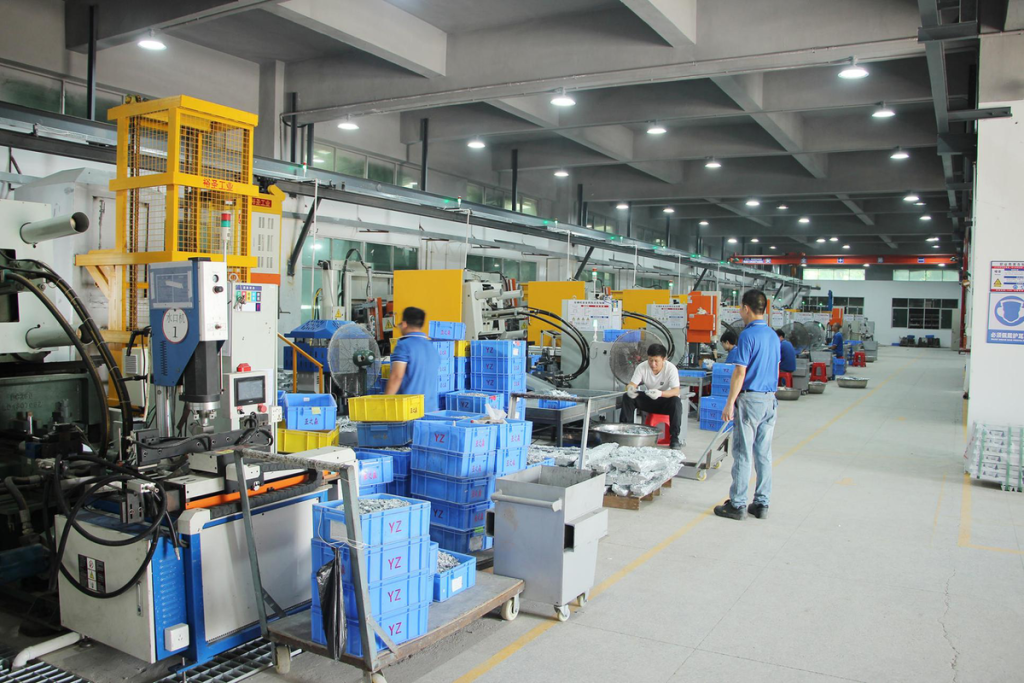
Supplier review should connect evidence to the product being sourced. A long equipment list or a folder of certificates is not enough by itself; buyers need to understand which entity, facility, process and control will apply to the proposed order.
The review can remain proportional to risk. A simple promotional pin and a multi-component licensed gift set may require different levels of artwork control, documentation, sampling and inspection.
Confirm company and facility identity
Match the quoted supplier, manufacturing facility, document holder and payment entity where relevant. Record the legal company name and production address used for the order rather than relying only on a trading name shown in a brochure.
When subcontracting or multiple sites are involved, ask which processes occur at each location and how quality responsibility is controlled. This is especially important when a customer program requires approval for a named facility.
- Quoted legal entity
- Production site and process location
- Document holder and validity
- Subcontracted activities, if any
Match capability to the product
Review the manufacturing route needed for the actual design: tooling, stamping, die casting, enamel work, printing, polishing, assembly, fabrication or packing. Ask for relevant examples or process explanations instead of accepting unrelated products as proof of capability.
Functional items require additional attention to mechanisms, formed parts, welds, hardware or working edges. Decorative experience alone does not confirm the ability to control those features.
Review quality controls by stage
A useful quality discussion follows the product through incoming material, tooling or artwork approval, in-process checks, finishing, assembly and final packing. Ask what is checked, when it is checked and how an issue is recorded and corrected.
Define the order-specific acceptance points in the approved specification. Appearance, dimensions, color, attachment operation and packaging may not all be verified in the same way, so the inspection plan should reflect the product.
- Approved drawing and sample control
- In-process appearance and dimensional checks
- Attachment or function checks
- Final count, packing and label review
Verify certificates in context
Check the named entity, address, scope, issuing body, issue date and validity period on each relevant record. A certificate may support supplier qualification without covering every product, material, facility or customer program.
Request the current document when certification or facility authorization affects the order. Buyers should also confirm their own customer, market and licensing requirements rather than assuming one record satisfies all programs.
Assess commercial and technical communication
Before ordering, observe whether questions are answered against the brief, whether open decisions are identified and whether revisions are controlled. Reliable communication should distinguish confirmed requirements from recommendations and assumptions.
Ask how changes to artwork, quantity, finish, packing or schedule will be documented. Clear version references and written approvals reduce the risk of two teams working from different specifications.
Build an order-specific review
Conclude the review with a short record of what has been confirmed and what remains open. Link capability, quality and documentation evidence to the proposed product rather than creating a generic pass-or-fail checklist.
The next step should be proportionate: artwork review, quotation, sample, document verification or a more detailed facility assessment. A focused process gives procurement and product teams a clearer basis for approval.
- Product and manufacturing route
- Required documents and facility scope
- Sample and approval plan
- Inspection and packing requirements
- Open commercial or technical decisions
Ready to Apply This?
Share the information you have and flag any decisions that still need technical input.